Every four years, football fans reopen the same argument: which World Cup stands above the rest? The question resurfaces with fresh urgency whenever a new tournament delivers drama, and this year's edition has plenty of supporters claiming it belongs at the very top. Settling that requires context, and context means working through all 23 editions played since 1930.
What emerges from that exercise is less a neat hierarchy than a story of shifting eras - from the primitive, sparsely populated tournaments of the 1930s to the media-saturated global spectacles of today. Format quirks, political backdrops and refereeing standards have shaped legacies as much as the football itself, which is why some famous old finals rank lower than nostalgia suggests. Fans following the tournament through platforms like sapphirebet today experience a completely different product to the one broadcast, sporadically and incompletely, in the competition's early decades.
The Early Years Struggle to Convince
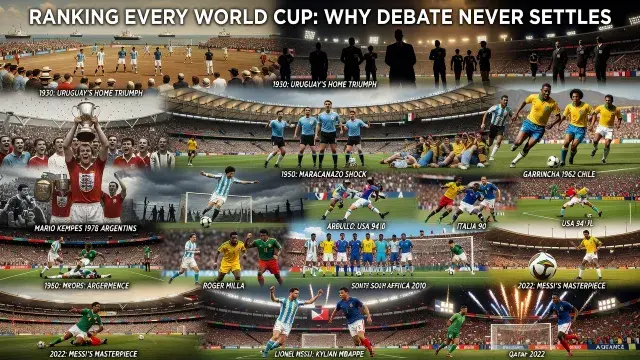
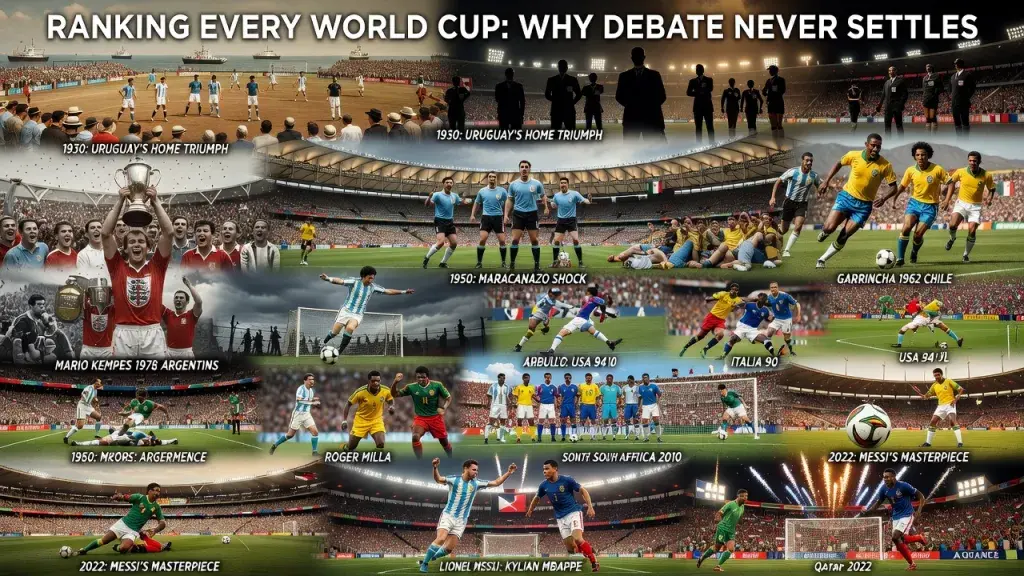
The bottom tier of any honest ranking belongs to the pre-Second World War tournaments: 1930, 1934 and 1938. Uruguay's inaugural triumph on home soil carries historical weight simply for being first, and its fierce derby final against Argentina produced a genuine spectacle. But with only 13 nations competing, and many of Europe's strongest sides declining to make the long Atlantic crossing, the football itself was uneven. Italy's back-to-back titles in 1934 and 1938 followed, but both are remembered as much for Mussolini's political shadow and questionable officiating as for footballing quality.
Format Flaws and Forgotten Editions
Several later tournaments suffered from structural oddities that undermined their drama. The 1950 World Cup in Brazil dispensed with a knockout phase entirely, settling the title through a round-robin group - only for the legendary "Maracanazo," Uruguay's stunning defeat of the hosts, to rescue the tournament's reputation. 1954's bizarre bracket, which funnelled all four group winners into the same half of the draw, produced a champion nobody particularly wanted. Meanwhile 1962 and 1966, despite producing icons like Garrincha and a memorable six-goal final in England, are widely regarded outside their host nations as functional rather than classic.
Where Quality Meets Circumstance
Even tournaments with strong individual matches can be dragged down by wider context. Argentina's 1978 triumph under military dictatorship, Italia '90's goal-shy defensiveness, and USA '94's dreary, penalty-decided final all featured moments of brilliance - Mario Kempes' heroics, England's Cameroon comeback, Brazil's quarter-final classic against the Netherlands - without ever achieving sustained excellence across the whole competition. South Africa 2010 came closer, with six of its final seven matches genuinely memorable, yet a sluggish group phase and a much-criticised match ball held it back from the very top.
Building Toward the Modern Debate
This slow climb through the decades sets up the more contentious modern era, where Qatar 2022's extraordinary final between Argentina and France reignited the "greatest ever" conversation in earnest. Whether this year's tournament surpasses that benchmark depends on how one weighs spectacle against consistency, and romance against refereeing standards - the same tension that has defined every World Cup ranking debate since 1930.